
What Is Imposter Syndrome? (And Why It Hits Hardest When You're Actually Doing Well)
You got the promotion. You even have the experience, the track record & the credentials.
And you're still waiting for someone to figure out you don't “belong” there.
This feeling has a name: Imposter Syndrome. And it's one of the most common things I see in women who are objectively doing really well… which is exactly what makes it so confusing.
What is Imposter Syndrome?
Imposter syndrome is the invisible gap between what you've accomplished and what you believe about yourself.
You can have everyreason to feel confident and still have that voice in the back of your head saying it was luck, timing, or the people around you… definitely not you. When something goes wrong, it feels like proof that you don’t belong in your role. And when something goes well, you explain it away.
Either way, the math never adds up in your favor.
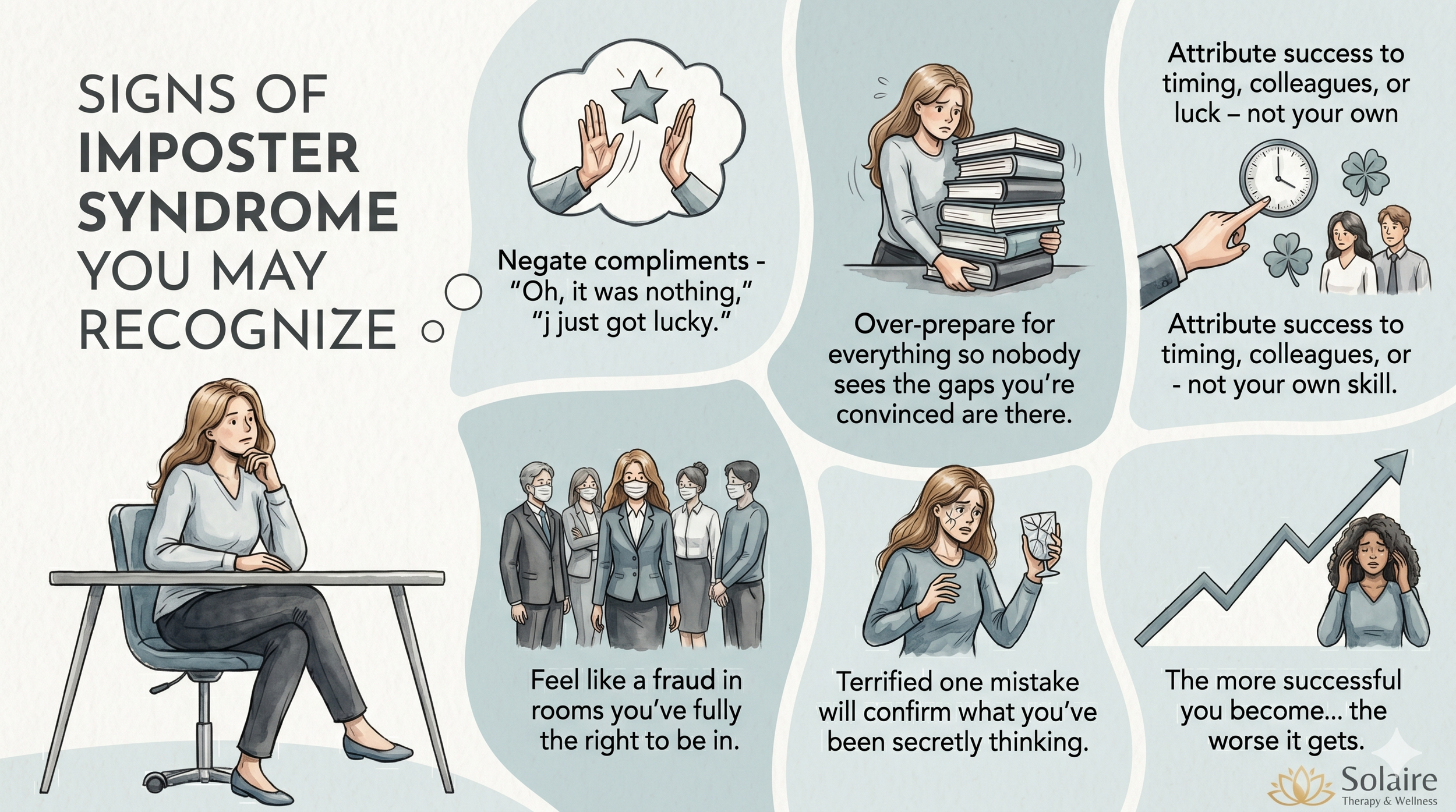
Signs You Might Recognize
You negate compliments - "Oh, it was nothing," "I just got lucky."
You over-prepare for everything so nobody sees the gaps you're convinced are there
You attribute your success to timing, your colleagues, or serendipitous circumstances - not your own skill
You feel like a fraud in rooms you've fully earned the right to be in
You're terrified one mistake will confirm what you've been secretly thinking all along
The more successful you become... the worse it gets
That last one surprises people every time. You'd think success would quiet your inner critic. But usually it just gives it more material to work with.
Why Imposter Syndrome Impacts Women So Much
Pyschology research shows that women experience imposter syndrome at higher rates than men - and it tends to be more persistent and more tied to their self-worth.
A big piece of the puzzle: imposter syndrome and anxiety are nearly related.
The hypervigilance, the catastrophizing, the constant overthinking about what could go wrong - those are anxiety patterns. Which means for a lot of women, addressing imposter syndrome means addressing the anxiety underneath it, not just the thoughts on the surface.
What Happens When It Goes Unaddressed
Women with unaddressed imposter syndrome tend to stay “smaller” than they need to. They don't go for the promotion, don't pitch their ideas, don't raise their hand.
They overwork to stay ahead of being "found out." And they often feel wired and tired from fighting their own thoughts all the time while still working so hard.
The longer it goes unaddressed, the more evidence your inner critic collects.
Every stumble or mistake reinforces your negative self-beliefs.
Every success you do experience gets justified or negated.
What Can Help You Work Through Imposter Syndrome?
Here's what doesn't work long-term: trying to convince yourself that you’re “great” or others telling you you’re doing well and thinking you’ll eventually believe it.
Reassurance feels good for about five minutes… but the doubt tends to come right back.
What actually works is getting underneath the pattern - understanding where it came from, what's fueling it, and learning how to build real tools to challenge the story your brain keeps telling you.
A lot of the women I work with come in thinking they’re having a confidence problem.
What we usually find underneath is anxiety that's been running the show for a long time and how they feel about themselves (i.e. self esteem!) needs a little work.
Learn more about anxiety therapy here, or read a little more about how I work.
Contact Lori for a free consultation to explore if this is right for you!
Written by Lori Streator, Licensed Therapist & Board Certified Bariatric Counselor (BCBC)
Lori has 20+ years of clinical experience specializing in anxiety therapy, high-functioning anxiety, emotional eating, and bariatric counseling for women. She serves clients in Bradenton, FL and online across Florida and Illinois, owns Solaire Therapy & Wellness, and hosts the Let's Talk About It with Lori Streator podcast.