
What Exposure Therapy (ERP) for OCD Looks Like
When people hear "exposure therapy," they usually picture something like being locked in a room with their worst fear until they either get over it or fall apart and demand to be let out.
While we could certainly call that an “exposure,” it’s not even close to what we do!
If the word "exposure" is the only reason you haven't reached out for OCD treatment, I want to help you understand what it is - because the real, treatment version looks nothing like what's might be in your head right now.
Exposure and Response Prevention, Broken Down
ERP is the gold standard of treatment for OCD, and it has two parts, both of which are gentler and more deliberate than the name suggests.
Exposure means practicing being with the thing that scares you - on purpose, at your pace, with real support. Not thrown into the deep end. No surprises. You know what's coming before it happens and you’ll be well-prepared.
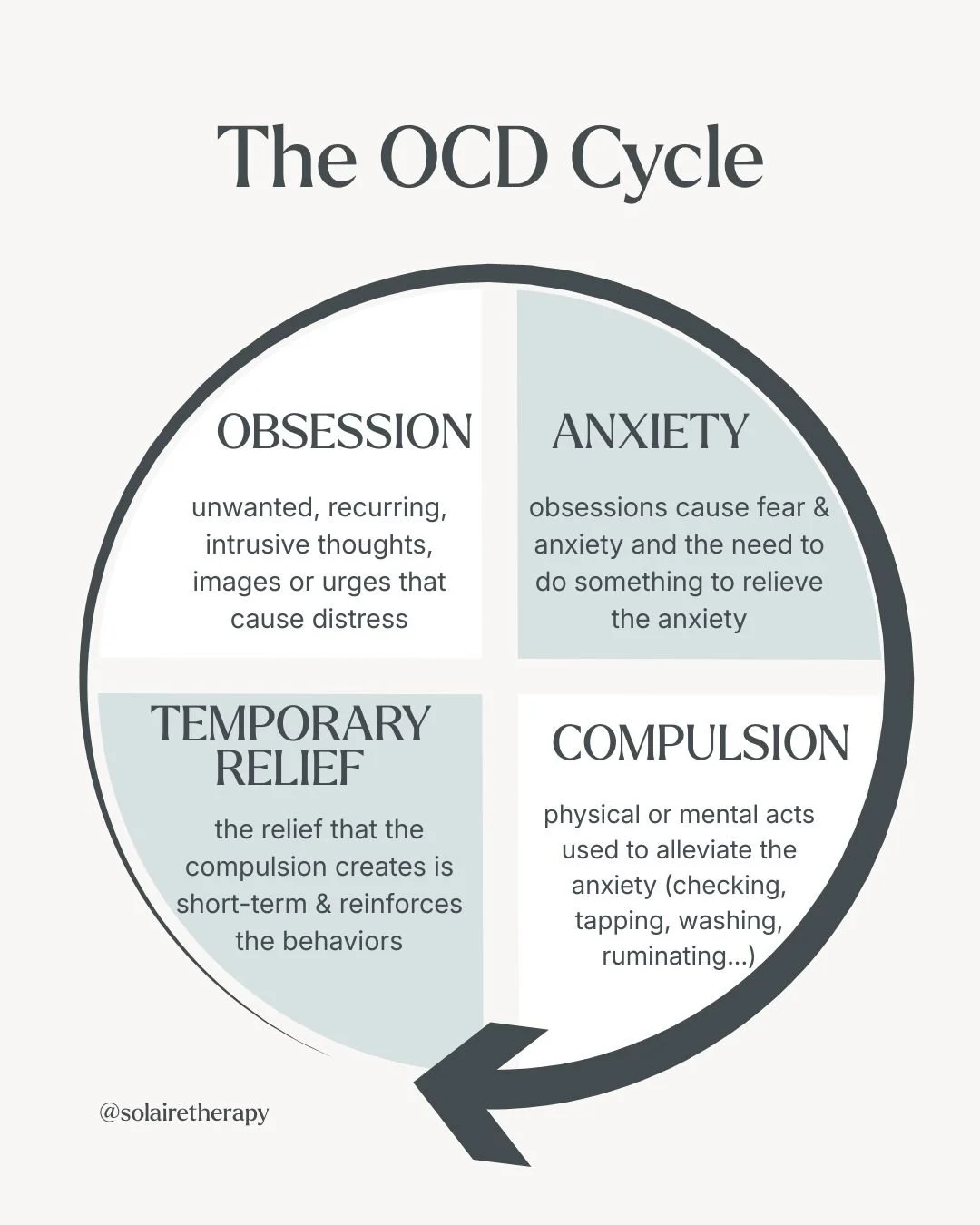
Response prevention means working on not doing the compulsion that's created short-term, temporary relief for you - the checking, the googling, the mental review, the reassurance-seeking, etc. This is actually the harder part for most people, because that compulsion has kind of been working, but it’s actually not doing you any good in the long run. The Response Prevention part is so important and what helps to create change and ‘habituation’ so that you don’t feel so consumed by your thoughts.
Why We Go Slow, On Purpose
A good exposure plan is built like a ladder, with however many rungs you need. You and your therapist build it together, step by step, starting with what's manageable and working from there. You know what a session involves before it starts, you know what to do between sessions, and nothing happens without your input.
This isn't about proving you can survive something terrifying. It's about giving your brain new information and the chance to actually learn that the outcome you've been afraid of this whole time doesn't happen the way OCD has been telling you it will.
The Part That Truly Creates The Change
Here's what a lot of people get wrong about why talk therapy alone doesn't fully work for OCD: talking about the intrusive thought can actually fuel the loop, especially if it turns into another form of reassurance-seeking without you even realizing.
ERP works differently. It's not about finding a better way to argue the thought or explain your way to feeling a sense of certainty. It's about changing your relationship to uncertainty itself - learning that you can have the "what if" and not feel like you HAVE to have the answer. That’s the part that helps create the change - the habituation to being able to manage the thought without having to DO anything about it.
What Success Actually Looks Like
The goal isn’t to never have an intrusive thought again. Thoughts happen - that's what our brains do.
The goal is learning the tools to help you handle the thoughts when they do show up, instead of the thoughts consuming you and creating distress. Recovery doesn't depend on the thoughts stopping. It depends on you trusting yourself again.
If the fear of exposure therapy has been the thing standing in the way of you getting help, I understand - and I’m happy to talk with you for a brief consult to help you see if this will be a good fit. Learn more about OCD & ERP therapy here, or book a free 15-minute consultation.
Talk soon, Lori
This same approach (going slow, building tolerance instead of chasing certainty or "fixing" the urge) is also how I work with hair pulling and skin picking, which live in the same family of conditions as OCD. Read more about treatment for hair pulling and skin picking here if that's something you or someone you love has been struggling with.
Written by Lori Streator, Licensed Therapist & Board Certified Bariatric Counselor (BCBC)
Lori has 20+ years of clinical experience specializing in anxiety therapy, high-functioning anxiety, emotional eating, and bariatric counseling for women. She serves clients in Bradenton, FL and online across Florida and Illinois, owns Solaire Therapy & Wellness, and hosts the Let's Talk About It with Lori Streator podcast.